


Finding your own style can feel impossible when there are always new trends, “in” ideas for fashion and makeup, and unspoken rules about how you’re supposed to act. What if I told you that in a world that tells people how to dress, how to talk, and how to express themselves on social media, it is okay to be different?
You may have been feeling like you don’t fit in, or like there isn’t a crowd out there where you truly belong. If so, this one is for you.
At Davis-Smith Mental Health in New Lenox, IL, we care a lot about helping teens feel at home in their own skin. Here are a few tips to help you start being uniquely and genuinely you.
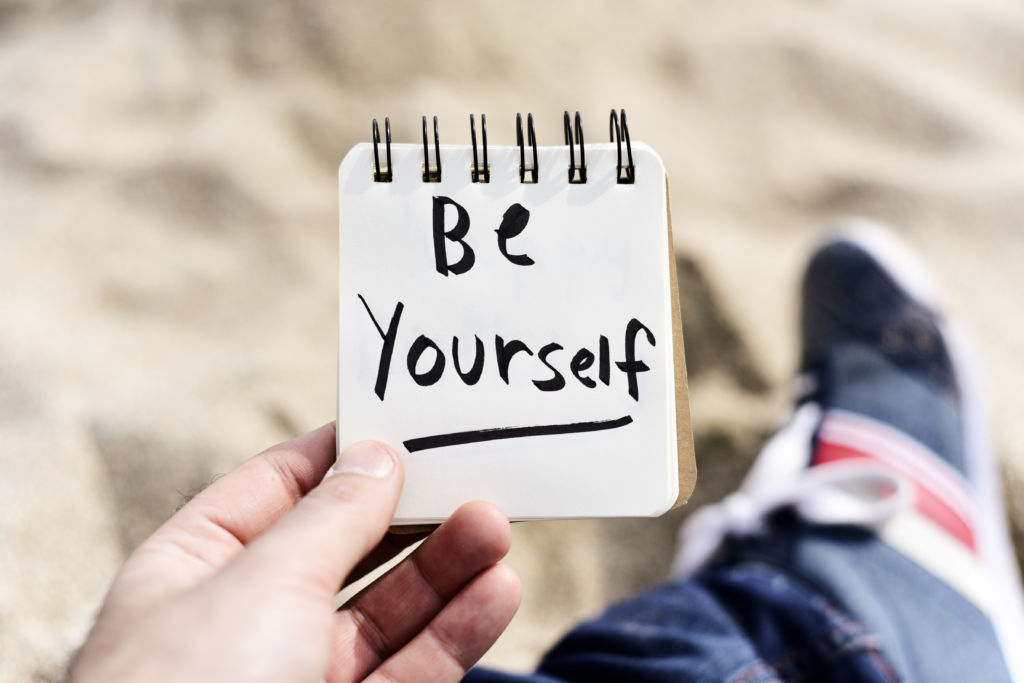
Be Yourself!
Here’s the thing: you can be uniquely you! That is something our world often misses.
Every culture has its own values, style, and way of life that developed over time. Those differences are what make the world interesting, and the same is true for people.
Junior high and high school students often feel they need to wear certain clothes, use certain makeup, or say certain phrases to seem cool. Yet many never stop to ask themselves why they do these things.
Why do they conform? Why do they give in to peer pressure, and why don’t they just be themselves?
It can be really hard to stand out from the crowd, to go against the status quo, and even to be different from your own family. That takes courage, and courage grows with practice.
Why It Can Feel So Hard to Be Different
Wanting to fit in is completely human. At this age, friends matter a lot, and standing out can feel risky when you’re not sure how people will react.
Social media adds another layer. Feeds tend to show the same looks and the same “perfect” faces over and over, until it starts to feel like there is only one right way to look.
The American Psychological Association has a health advisory on social media use in adolescence if you want to read more. One simple step you can take on your own is noticing how you feel after scrolling, and muting or unfollowing accounts that leave you feeling worse about yourself.
Finding your own style starts with a little curiosity. Next time you reach for a trend, ask yourself a few honest questions:
- Do I actually like this, or do I like how people might react to it?
- Would I still wear or do this if nobody saw it?
- When do I feel most like myself, and what am I wearing or doing then?
- Whose opinion am I really worried about?
There are no wrong answers. Sometimes you’ll realize you genuinely love a trend, and that’s great, too!

Here Are a Few Tips to Become Uniquely and Genuinely You
These ten tips are simple, but they take practice. Pick one or two to start with and build from there.
1. Never apologize for who you are
You can have your own thoughts about things. You can have opinions, beliefs, and values that are different from your family and friends, and you never need to apologize for that!
Standing firm doesn’t mean being rude about it. You can say “I see it differently” kindly and still hold on to what you believe.
2. Embrace your differences
Embrace that you have freckles, dimples, moles, a crooked nose, or uneven eyebrows. All these things make you a unique human, and there is beauty in the features you might see as flaws.
Try this: choose one feature you usually criticize and find one neutral or kind thing to say about it. “My freckles come out every summer” is a perfectly good start.
3. Create your own style
Ignore the social rules that say you must wear blue because you’re a boy or wear makeup because you’re a girl. You can wear, dress, and express yourself the way that feels right to you.
If you are artsy, be artsy, even if your sister is the traditional girly girl who loves high heels and makeup. Style is more than clothes, too; it shows up in your music, your humor, your hobbies, and the way you decorate your room.
4. Use daily affirmations
Every day, look in the mirror and affirm at least one thing you like about yourself and your appearance. It may feel awkward at first, and that is normal.
Keep them believable, like “I have a great laugh” or “I’m a loyal friend.” Over time, these small reminders can help quiet the inner critic.
5. Remember you are the author of your story
You are the author of your life story, and you serve a unique purpose in this world. There is only one of you, and that makes you stand out.
6. Know that outward appearances aren’t everything
Have you ever met a beautiful person who had an ugly heart? That person may have other struggles going on that you don’t know about.
Value yourself for having a beautiful heart in a sometimes ugly world of hate. Kindness, loyalty, and a good sense of humor are part of who you are, too.
7. Remember that size doesn’t define you
Taking care of your body matters so much more than the number on a tag. Bodies come in all shapes and sizes for lots of reasons, including genetics and body type.
Even clothing sizes vary from one designer to the next. Trust me, I wear anything from a size 10 to a size 13 on a weekly basis because of different designers!
If thoughts about your body, weight, or food start taking up a lot of your day, please tell a parent, school counselor, or doctor. You deserve support with that.
8. Celebrate you
Be courageous and take pride in your differences. Find that one thing about yourself that stands out, and be proud!
Maybe you tell the best jokes, are a supportive friend, have the best cooking skills, or know how to find the most fun over breaks. Whatever your unique strengths or talents are, celebrate them!
9. Stay true to you
The world will test you again and again and will make you question yourself. Plant your feet steady on the ground and remind yourself of your worth and value. The world needs you in it.
10. Trust your story
Trust your story. You will develop and change over time.
I remember hating my hair, and once I got older, I embraced my curls and stopped hating them. I learned I would rather have healthy hair than fried, damaged hair from over-straightening it to fight my curls.
Following the Crowd vs. Finding Your Own Style
Being yourself doesn’t happen all at once. It shows up in a lot of small, everyday choices.
| Situation | Following the crowd | Being yourself |
|---|---|---|
| Getting dressed | Wearing what everyone else wears so no one comments | Wearing what makes you feel good, even if it’s different |
| Social media | Posting only what you think will get likes | Sharing what you actually enjoy, or not posting at all |
| Opinions | Agreeing with friends to avoid standing out | Sharing your view kindly, even when it’s different |
| Your features | Hiding or picking apart the things you see as flaws | Seeing them as part of what makes you, you |
| Family | Feeling like you have to match your siblings | Respecting family rules while being your own person |
Most of us live in both columns at different times, and that’s okay. The goal is to notice when you’re choosing something because you want it and when you’re choosing it out of fear.
Embrace Your Unique Self
Finding your own style is a work in progress. You will develop and change and have different likes and dislikes over time.
It is okay to experiment and try new styles. I did, and you can too!
Parents do have rules, and you do need to respect those rules. But I do challenge you to have honest talks with your parents about your style and who you want to be.
My hope is that they will listen to understand and help you embrace the unique YOU in your life story. A few tips for that conversation:
- Pick a calm moment, not right before school or in the middle of an argument.
- Explain what your style means to you: “Wearing this makes me feel more like myself.”
- Ask what worries them, and really listen to the answer.
- Look for middle ground, like trying a bold hair color over summer break or saving a look for the weekend.
- If the answer is no for now, ask when you can talk about it again.
For Parents: Supporting Your Teen’s Style
If your teen’s style is changing fast, try to meet it with curiosity instead of criticism. Asking “What do you like about it?” opens a door, while “You’re not wearing that” usually closes one.
Save firm limits for real safety concerns, school dress codes, and permanent changes, and explain your reasons. For the rest, let your teen experiment, since trying things on is how they figure out what fits.
Our post on teen acceptance goes deeper on how to support your teen’s choices without pushing them away.
When Finding Your Own Style Feels Harder Than It Should
Feeling a little insecure or out of place is part of being a teen. Sometimes, though, the pressure to fit in starts weighing on everything.
| What you notice | Everyday insecurity | Worth getting support |
|---|---|---|
| Self-talk | Occasional “ugh, my hair” moments | Constant harsh comments about your looks or your worth |
| Social life | Feeling out of place in a new class or crowd | Avoiding school, friends, or activities because you feel you don’t fit |
| Social media | Comparing yourself now and then | Feeling worse after scrolling almost every time, but unable to stop |
| Body and food | Wanting to feel good in your clothes | Thoughts about weight, food, or your body taking over your day |
| Mood | Down for a day or two | Sad, anxious, or hopeless most days for weeks |
If several things on the right sound familiar, it is worth talking with someone. The National Institute of Mental Health has helpful information for families about child and teen mental health.
If you are ever having thoughts of hurting yourself, call or text the 988 Suicide and Crisis Lifeline at 988, any time. In an emergency, go to the nearest emergency room.
How Counseling Helps Teens Feel More Like Themselves
Sometimes it helps to talk things through with someone outside your family and friends, especially when finding your own style feels lonely. At Davis-Smith Mental Health, teen counseling is relaxed and conversational, and some teens open up more while drawing, walking, or doing an activity.
Our team uses approaches like Cognitive Behavioral Therapy (CBT), which can help teens catch harsh self-talk and swap it for kinder, more realistic thoughts. If standing out feels scary, our social anxiety therapy for teens can help with that worry, too.
For more ideas you can try at home, read our post on teen self-esteem and learning to love yourself.

Feel at Home in Your Own Skin
For more help or resources for self-esteem, give us a call. We would be happy to support you as you find your unique self, in person at our New Lenox office or through telehealth, as long as you’re physically in Illinois during each session.
Teens and families come to us from Lockport, Tinley Park, Orland Park, and all over the area. Call (815) 409-5940 or request a session online, and we’ll take it from there.
Frequently Asked Questions
Personalized care
Licensed, caring therapists
Every therapist on our team works with anxiety. We will match you with the right therapist for you.
Anxiety at the center
Anxiety is the foundation of everything we do.
EMDR-trained care
EMDR helps clients process what talk therapy alone can’t reach.
Every age and stage
From children and teens to young adults and adults.
In-person and telehealth
Our New Lenox office or secure online therapy for clients in Illinois.





In-network with
- Aetna PPO
- Cigna / Evernorth
- BCBS PPO
- UnitedHealthcare
- UMR
- Initial assessment $200
- Ongoing sessions $150
Insurance and rates
Insurance Accepted
We work with most major insurance plans and offer self-pay options. We believe quality mental health care should be accessible. Davis-Smith Mental Health is in-network with the following insurance providers.
We also offer self-pay options and can provide a Superbill for out-of-network benefits.





You don’t have to figure this out alone
If something told you to keep reading this far, trust that feeling. Whether it’s for yourself, your teen, or your young adult, the hardest part is deciding to start. We are here when you are ready.
there is courage in change ♥


