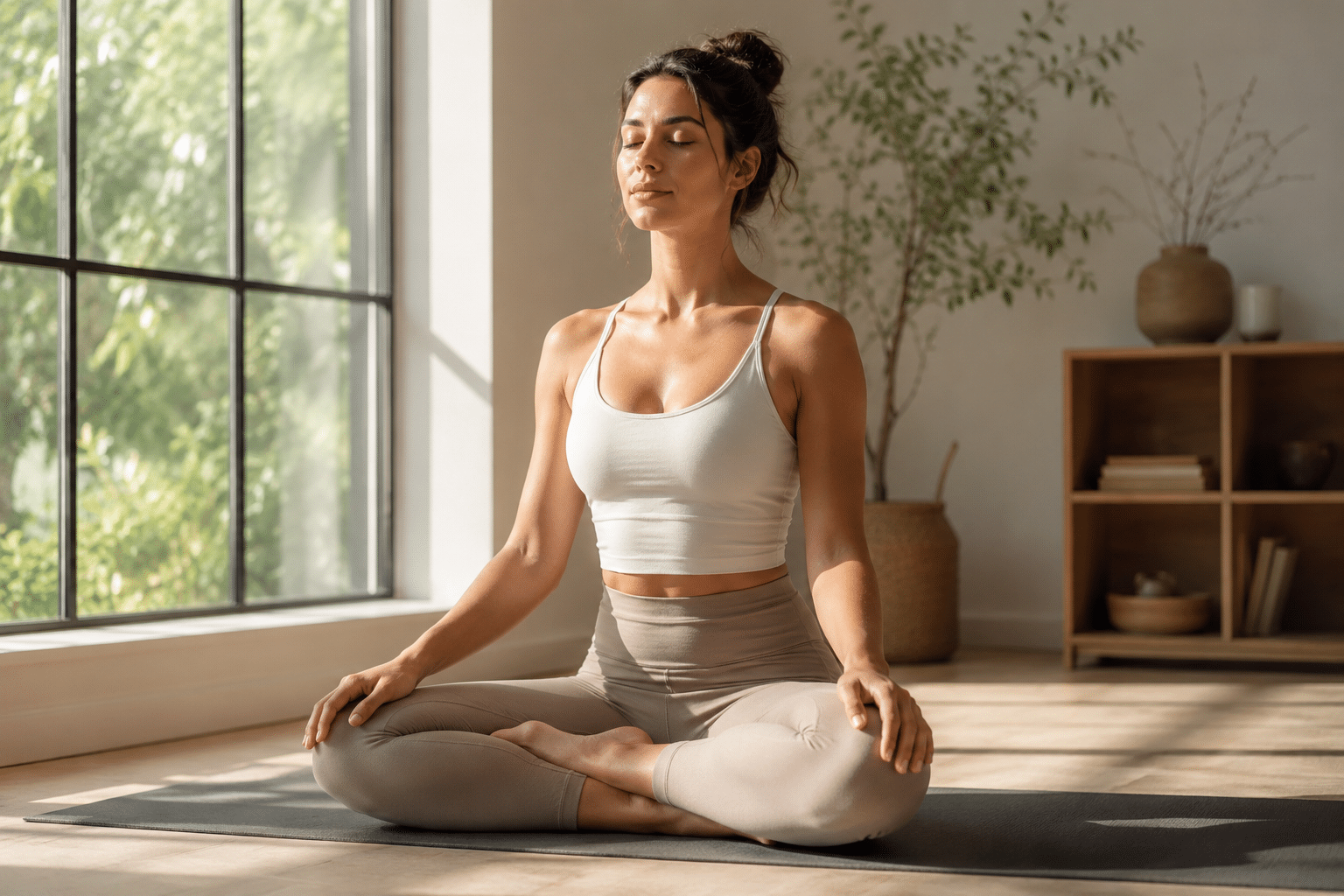
What if we told you that exercise for anxiety could help your mind and your body at the same time? Anxiety does not only live in your thoughts. It can also show up in your body as aches and pains, stiff muscles, tension headaches, and exhaustion.
The good news is there is a way to help your anxiety and your body together, and it is moving your body! You do not need a gym membership, fancy gear, or hours of free time to start.
At Davis-Smith Mental Health in New Lenox, IL, anxiety is at the center of our work with teens, young adults, and adults. Here is why moving helps, how to begin, and when to reach out for more support.

This post is part of our complete guide to teen anxiety, which covers the signs, causes and what helps, all in one place.
The Body and Mind Connection
When you feel anxious, your body gets ready to face a threat, even if the threat is a test, a text, or a packed week. Your heart beats faster, your muscles tighten, and your breathing gets quick and shallow.
That response is useful in a real emergency, but when it happens day after day, your body feels it. Over time, all that tension can turn into the aches, headaches, and tiredness so many anxious people know well.
For a teen, it might look like stomachaches before school or a stiff neck during finals week. For a young adult, it might be clenched shoulders at a desk all day and feeling wiped out by dinner.
The body and mind work together, so it helps to care for both. That is where exercise for anxiety comes in, since it gives all that built-up energy somewhere to go.
You Do Not Have to Love the Gym
It is understandable if the gym is not your thing, or if you feel like you never have enough time in your week. Many people hate going to gyms and do not like getting their sweat on.
What if you could still move without getting sweaty and get it done in 30 minutes? Even 30 minutes of aerobic exercise a day can lift your mood, ease anxiety symptoms, and help you feel healthier.
Those 30 minutes do not have to happen all at once, either. Three 10-minute walks count, and so does dancing around the kitchen while dinner cooks.
| If this sounds like you | Try this kind of movement |
|---|---|
| I hate the gym | Walking outside, biking around the neighborhood, or a dance video at home |
| I only have a few minutes | A 10-minute walk after lunch or a quick stretch between classes or meetings |
| It is raining or freezing outside | Yoga or a follow-along video on a mat or a comfy rug |
| I do not want to get sweaty | Gentle yoga, Pilates, or an easy-paced walk |
| I feel too anxious to start | Five minutes of slow walking with deep breathing |
How Exercise for Anxiety Helps Your Mind and Body
Here are some quick facts about exercise and mental health, and why each one matters when you are anxious.
Endorphins
Endorphins are feel-good chemicals your body releases that create a pleasure response. Your body releases them with simple aerobic exercise like walking, jogging, yoga, dancing, biking, or Pilates. That lift is part of why so many people feel lighter after moving, even on days they did not feel like starting.
Better Sleep
Exercise helps during the day, and the benefit carries over to night when you go to bed. Moving your body for around 30 minutes a day can help you get a better night’s sleep.
That matters, since many people notice their anxiety is worse after a poor night of sleep. If a hard workout late at night leaves you wired, try moving earlier in the day.
Blood Flow and Energy
Exercise gets your blood moving through your whole body, which can help you feel more awake and alert. Over time, regular activity is also good for your heart and blood pressure.
A Break From Your Worries
Exercise is also a good distraction from your worries. Many people find that while they move, their attention shifts to nature, the music they are listening to, or their own breathing and heart rate.
Even a short break from worry reminds your brain that it can settle down. That is a skill you can build on.
A Feeling of Accomplishment
Sometimes anxiety convinces people they can’t do something. It may even trick their brains into thinking they are lazy or not worth much, and those thoughts are not true.
After exercising, many people say they feel better about themselves. They feel good that they used their time to reach a goal they set, even a small one like a walk around the block.
Better Overall Health
Exercise is good for your brain, and it keeps your whole body healthier too. In the winter months, when colds and the flu make the rounds, regular movement, good food, and rest all help your body stay strong.
Your body will thank you for the time you give it each day. Taking care of your body is one of the most practical ways to take care of your mind.
How to Begin: Start With a Walk
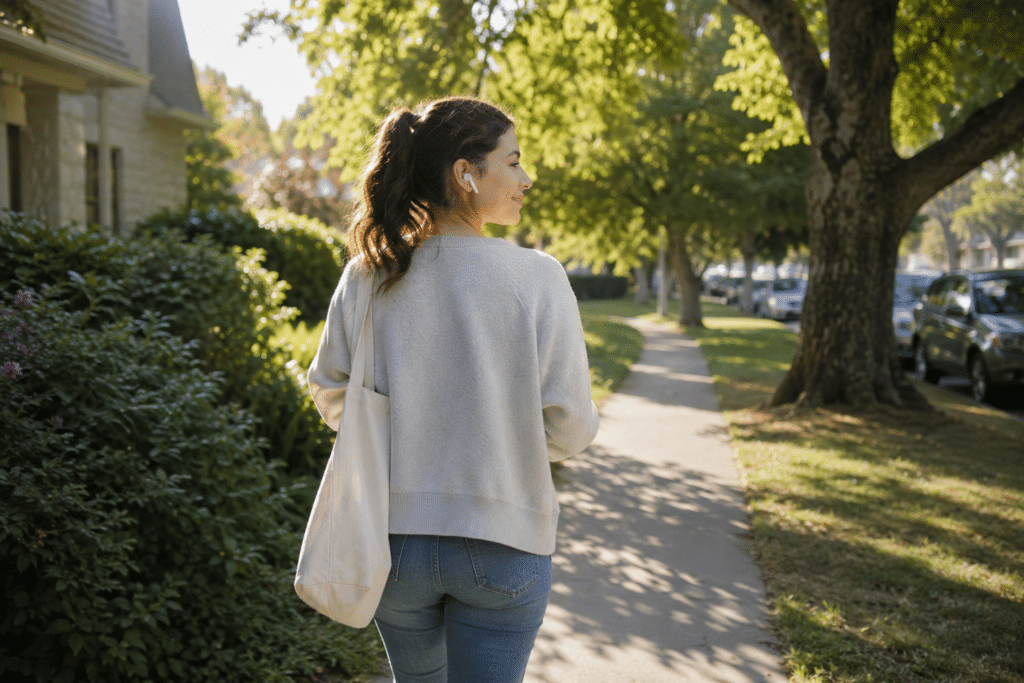
If you are feeling lost about where to start, try putting on a pair of headphones with your favorite songs and begin walking. Walking is a great time for self-reflection and a simple way to get in tune with your body.
Use deep breathing on your walks and tap into your senses. Here is a simple way to turn an ordinary walk into a calming one:
- Start at an easy pace for the first few minutes and let your shoulders drop.
- Breathe in slowly through your nose, then breathe out a little longer than you breathed in.
- Notice what you see, like the color of the leaves or a butterfly fluttering by.
- Notice what you hear and smell, like birds, traffic, or fresh-cut grass.
- Notice how the wind feels as it sweeps against your arm.
- When a worry pops up, gently bring your attention back to your breath or your steps.
If you are new to exercise or have a health condition, check with your doctor before starting a new routine. They can help you figure out what kind and amount of movement is right for you.
Rainy Day Ideas You Can Do at Home
If it is rainy out, grab a yoga mat or a comfortable rug to lie on, and look up yoga or meditation videos on YouTube to follow along at home. It is a quick and free resource you can use before your day starts or at the end of your day, whichever works best.
A few other ideas for days you are stuck indoors:
- Put on a few favorite songs and dance around your room.
- Stretch for ten minutes while you watch a show.
- Try a beginner Pilates or gentle yoga video made for small spaces.
For teens, this can be an easy way to shake off the school day before homework starts. Parents, joining in once in a while can make it feel less like a chore and more like time together.
Tips for Sticking With Exercise for Anxiety
Try not to be hard on yourself, since starting a new routine is hard for everyone. Be encouraged once you start, even if it is only 10 minutes a day.
The way you feel afterward will keep you coming back for more. Use good time management and self-care to block out these few minutes each day for your physical health.
Consider journaling before and after your walks. It helps you track your goals and notice patterns over time:
- Before: How anxious do I feel right now, from 1 to 10, and where do I feel it in my body?
- After: What changed in my breathing, my mood, and my energy?
- At the end of the week: Which days did I move, and how did I sleep those nights?
One more thing to know: a faster heartbeat and quicker breathing during exercise can feel a lot like anxiety at first. That is your body doing its job, and starting slow can help you get comfortable with those feelings.

When Movement Is Not Enough
Exercise for anxiety is a wonderful tool, but it is not a cure-all. If anxiety keeps getting in the way of school, work, sleep, or relationships, even when you are moving regularly, it may be time for extra support.
| What you notice | Everyday stress | Time to reach out |
|---|---|---|
| Worry | Comes and goes with busy weeks | Shows up most days, even when things are fine |
| Your body | Some tension that eases after a walk | Headaches, stomachaches, or tight muscles that do not let up |
| Sleep | An occasional restless night | Trouble falling or staying asleep most nights |
| Daily life | You keep up with school, work, and friends | You avoid plans, classes, or tasks because of anxiety |
| Panic | Rare or never | Sudden waves of fear, a racing heart, or trouble breathing |
The Anxiety and Depression Association of America has a helpful page on exercise, stress, and anxiety. The National Institute of Mental Health has more information about anxiety disorders.
How Therapy Helps With Anxiety
Therapy helps you understand what is driving your anxiety and gives you tools that work alongside healthy habits like exercise. At Davis-Smith Mental Health, we use approaches like Cognitive Behavioral Therapy, or CBT, to help you notice anxious thoughts and respond to them differently.
Sessions with teens are relaxed and conversational, and some teens open up more while drawing, walking, or doing an activity. Healthy habits like movement and sleep can keep supporting that work between sessions. Learn more about our anxiety therapy and teen anxiety counseling, or read our tips for calming racing thoughts and our guide to coping skills for teens.
Feel Calmer, One Step at a Time
If anxiety is wearing on your body and your mind, reach out and we can talk about what might help. We see clients in person at our New Lenox office and through telehealth, as long as they’re physically in Illinois during each session.
Families come to us from Joliet, Frankfort, Mokena, Tinley Park, and across Will County. Call (815) 409-5940 or request a session online to get started.
Frequently Asked Questions
Personalized care
Licensed, caring therapists
Every therapist on our team works with anxiety. We will match you with the right therapist for you.
Anxiety at the center
Anxiety is the foundation of everything we do.
EMDR-trained care
EMDR helps clients process what talk therapy alone can’t reach.
Every age and stage
From children and teens to young adults and adults.
In-person and telehealth
Our New Lenox office or secure online therapy for clients in Illinois.





In-network with
- Aetna PPO
- Cigna / Evernorth
- BCBS PPO
- UnitedHealthcare
- UMR
- Initial assessment $200
- Ongoing sessions $150
Insurance and rates
Insurance Accepted
We work with most major insurance plans and offer self-pay options. We believe quality mental health care should be accessible. Davis-Smith Mental Health is in-network with the following insurance providers.
We also offer self-pay options and can provide a Superbill for out-of-network benefits.





You don’t have to figure this out alone
If something told you to keep reading this far, trust that feeling. Whether it’s for yourself, your teen, or your young adult, the hardest part is deciding to start. We are here when you are ready.
there is courage in change ♥