

Learning real coping skills for teens is one of the most important things a young person can do, but most teens have never been taught how to build them on purpose. They are figuring it out in real time, often leaning on habits that feel helpful in the moment but quietly make things harder over time.
At Davis-Smith Mental Health, we work with teens and young adults every day who are doing their best to manage stress, big emotions, and the pressure that comes with growing up. What we have seen again and again is that teens who develop genuine coping skills do not just feel better in the short term. They start to trust themselves.
This post is for the parents who want to help and for the teens who are ready to start.
Your Teen Already Has Coping Skills (They Just Don’t Know It Yet)
One of the first things we tell teens in session is this: you are probably already using coping skills. You just don’t realize it.
If your teen has ever felt completely overwhelmed and decided to take a nap, hop in the shower, go sit outside, or call a friend, those are coping skills. The problem is that most teens assume coping skills have to look a certain way. They picture worksheets and breathing exercises and things that feel assigned and clinical.
We tell teens regularly that coping skills are meant to help you relax and bring yourself back to a grounded state. That is it. When a teen is already doing something that helps them reset, the work is not starting from scratch. It is helping them recognize what they are already doing and build on it intentionally.
“Coping skills are meant to help you relax and bring yourself back to a grounded state.”
What Gets in the Way: Habits Teens Mistake for Coping
Not everything that feels like relief actually helps. Many teens come into our office managing their stress through habits that have buried themselves so deeply into daily life that they feel completely normal. We covered all six of these in depth on the Block Out the Noise Podcast, and they are worth naming here.
- Chasing energy. Reaching for caffeine, energy drinks, or soda to push through exhaustion feels productive. The problem is that caffeine activates the same fight-or-flight response that anxiety does. It keeps the nervous system on high alert rather than helping it settle.
- Constant electronic consumption. Scrolling and gaming feel like a break, but they tend to feed anxiety rather than reduce it. The more a teen relies on a screen to escape discomfort, the harder it becomes to sit with real life when the phone is put down.
- Overriding the body. Skipping meals, ignoring exhaustion, and pushing past physical limits send the nervous system into high alert. The body starts communicating through headaches, stomach aches, and irritability because its needs are not being met.
- Staying still. Anxiety is energy. When teens stay physically and emotionally still, that energy has nowhere to go. Avoidance feels like protection, but it tends to make anxiety louder over time.
- Taking the edge off. Reaching for substances, alcohol, or other numbing habits to get through a hard day is not coping. It is avoidance, and it creates a deeper problem underneath the original one.
- Negative self-talk. The internal voice that says “I can’t do anything right” or “I’m a failure” feels like honesty, but it functions like a habit. Left unchecked, it shapes how a teen sees themselves and what they believe they are capable of.
Listen to the Episode here:
None of these look dramatic from the outside. That is exactly what makes them so easy to miss. They feel like normal ways to survive a hard day, but they keep anxiety exactly where it is and, over time, many of them make it grow.
Teaching teens to recognize the difference between real coping and avoidance is one of the most meaningful parts of the work we do.
Body Regulation: The Foundation of Coping Skills for Teens
When it comes to coping skills for teens, body regulation keeps coming up as the core. When a teen is overwhelmed, their nervous system is in a heightened state. The goal of any coping skill in that moment is to bring the body back down.
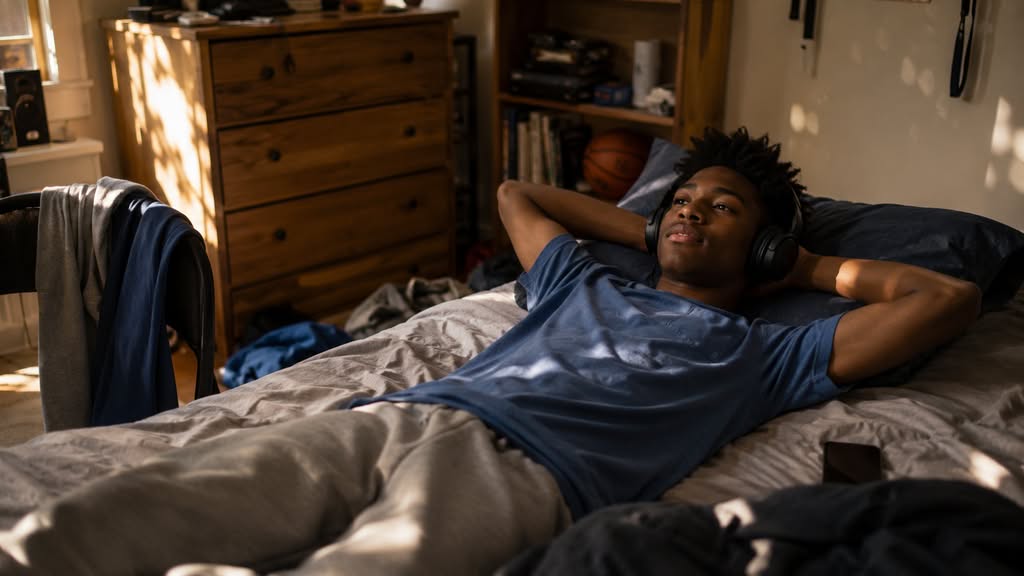
What that looks like is completely individual. One teen might take a long shower. Another goes for a walk. Another puts on a playlist and lets the music do the work. There is no single right answer, and there really should not be.
What matters is finding something that actually works for that specific teen, not something that looks correct on paper.
We also tell teens something that often surprises them: what works this time may not work the next time. Coping skills are not permanent fixes. They are tools. The more tools a teen has available, the better equipped they are for whatever comes up next.
Coping Skills Should Be Things Your Teen Actually Enjoys
One of the biggest myths about coping skills is that they have to feel like work. Teens often assume that if something is enjoyable, it does not really count.
That is not true.
A coping skill can be anything that helps a teen reduce stress, come back to the present moment, and feel more like themselves again. Going for a run, listening to music, journaling, cooking, drawing, spending time with a pet, playing a video game for a set amount of time — all of these can be legitimate coping skills.
The line is not drawn based on how fun something is. It is drawn based on whether the activity puts the teen more at risk. Scrolling for hours, using substances, or picking a fight to release tension are not coping skills, even if they feel like relief in the moment. Real coping skills reduce stress without creating new problems.
When teens understand that coping skills for teens can be things they genuinely want to do, they are far more likely to reach for those tools when they need them.
What Parents Can Do to Help (And What to Stop Doing)
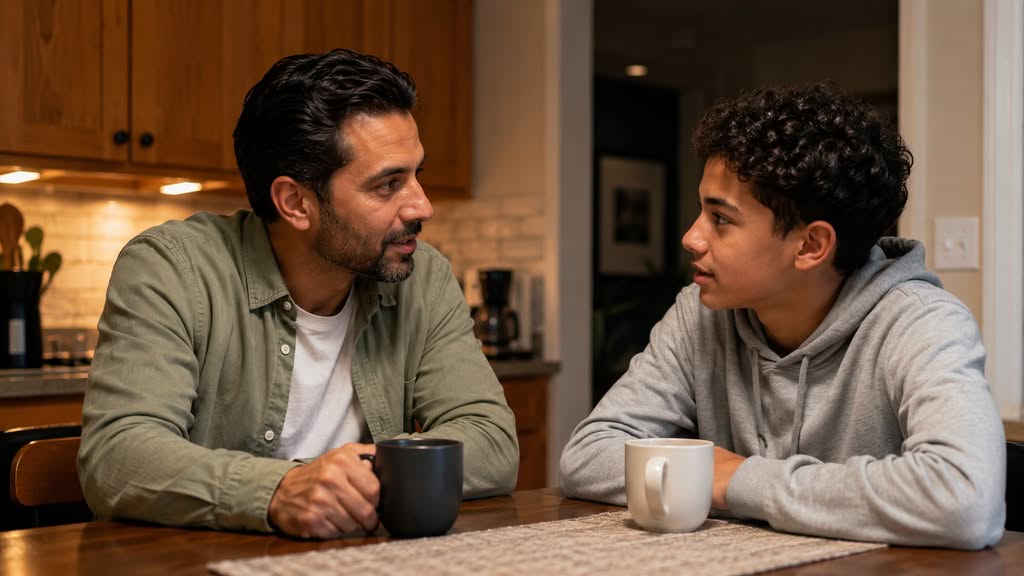
Parents have more influence over a teen’s coping habits than they often realize, and very little of it comes from the advice they give. It comes from what they model.
Teens are watching how parents handle frustration, stress, and conflict. When a parent loses their temper without acknowledging it, or reaches for something to take the edge off a hard day, the teen is taking notes. Not always consciously, but the pattern registers.
The good news is that parents do not have to be perfect. They just have to be honest.
If you are feeling overwhelmed, it is okay to say so and then show your teen what you do next. Saying something like, “I’m really frustrated right now. I’m going to take a few minutes before we talk about this,” is not a sign of weakness. It is one of the most powerful things you can model. Parents do not have to have an immediate answer to every hard moment. Giving themselves permission to pause is the skill.
Teens are often impulsive and genuinely struggle to regulate in the heat of the moment. Watching a parent do it, imperfectly but intentionally, is one of the best teachers they will ever have.
Social Media: Coping Skill or Crutch?
Social media is a complicated one. In small doses and with real intention, it can actually function as a coping skill. Connecting with a friend online, watching something funny, giving the brain a short break from something stressful — that can be healthy.
The problem is that it almost never stays there.
What starts as a five-minute distraction turns into an hour of scrolling. At that point, social media is no longer helping the teen cope. It has become something they need in order to feel okay. That is a meaningful difference.
When screens move from coping tool to something closer to codependency, they tend to feed anxiety rather than relieve it. The comparison, the pressure to perform online, the fear of missing out — these are real and relentless. The more a teen relies on screens to manage how they feel, the harder it becomes to sit with discomfort in real life.
This is not an argument against social media. It is an argument for helping teens build real awareness around how their habits are actually affecting them. If a teen cannot put the phone down without feeling anxious, that is information worth paying attention to.
How You Know Your Teen Is Actually Using Their Coping Skills
This is one of the questions we hear most from parents: how do I know if any of this is actually working?
Progress rarely announces itself. Your teen is not going to walk in and say, “I used my coping skills today.” More likely, it sounds like this: “I got really upset and I just went to my room and listened to music for a while.” Or, “I didn’t feel like going outside, but I did it anyway, and it actually helped.”
That is exactly what progress looks like.
The teen is beginning to share what they do when they feel overwhelmed or overstimulated. They are making real connections between how they feel and what they choose to do about it. That awareness is the foundation on which everything else is built.
If your teen is not there yet, that is okay. Learning to recognize and use coping skills for teens takes real time. It also takes a space where the teen feels safe enough to try. That is something therapy can offer, and it is exactly what we work toward at Davis-Smith Mental Health.
Coping Skills Are Not Just for Teens in Crisis
We hear this from parents regularly: “My teen seems fine. Do they really need this?”
The answer is yes, and not only for teens who are visibly struggling.
“Everyone needs coping skills. This isn’t just something for teens. It’s a skill every person needs to help them manage the challenges that just come with being human.”
Conflict, disappointment, failure, transitions, hard days. Every person will face all of those things. Having real coping tools means not starting from zero every time something goes wrong. There is already something to reach for.
Starting early matters. A teen who learns to regulate their emotions, challenge negative self-talk, and ask for help before things reach a breaking point is building something that will serve them well beyond adolescence. The American Psychological Association has long emphasized that emotional regulation skills developed in adolescence form a lasting foundation for adult mental health and resilience.
If you are also noticing signs of anxiety or depression alongside your teen’s struggles with coping, our anxiety counseling and depression counseling pages share more about what that support can look like.

When Coping Skills Alone Are Not Enough
Sometimes the work of building coping skills needs more than a conversation at home or a few good tools. There are moments when a teen needs professional support to get there.
Some signs it may be time to reach out include persistent sadness or irritability that does not lift, withdrawal from friends and activities they used to care about, changes in sleep or appetite, a growing reliance on substances or screens to get through the day, or a teen who seems completely stuck without any ability to find relief. Our post on signs of teen anxiety walks through many of these in detail if you want to understand what to look for.
None of these signs means something is wrong with your teen. They mean your teen deserves more support than they are currently getting.
If you are wondering what that first step looks like, our what to expect page walks through exactly how things work. We also have a full FAQ page if you have questions before reaching out.
Coping Skills for Teens: What Helps vs. What Backfires
| Coping Approach | How It Helps | When to Watch Out |
|---|---|---|
| Physical movement (walking, running, stretching) | Releases stress hormones, regulates the nervous system | Rarely a concern; generally healthy in any amount |
| Shower or sensory reset | Grounds the body and shifts the mental state | Healthy as a tool; a concern if used only to avoid necessary conversations |
| Music and creative outlets | Emotional release without requiring words | Worth watching if it becomes a way to avoid socializing or connection altogether |
| Journaling or drawing | Builds self-awareness, helps process difficult emotions | Highly encouraged |
| Calling or texting a trusted person | Reduces isolation and offers perspective | Healthy; venting without any problem-solving can occasionally prolong distress |
| Social media and screens | Short-term mental break | Becomes a concern when anxiety increases without it, or it replaces real connection |
| Substances or alcohol | Temporary numbing of discomfort | Always a red flag; feeds anxiety and creates new problems long-term |
| Isolation and staying still | Feels like rest | Becomes a concern when anxiety increases without it, or it replaces a real connection |
Ready to Help Your Teen Build Real Coping Skills?
At Davis-Smith Mental Health, we work with teens, young adults, and families in New Lenox, IL and the surrounding Chicagoland area. Our goal is simple: help every young person find the tools that actually work for them and trust themselves to use them.
If you are ready to take the next step, we would love to connect.
Call us: 815-409-5940 Schedule an appointment