
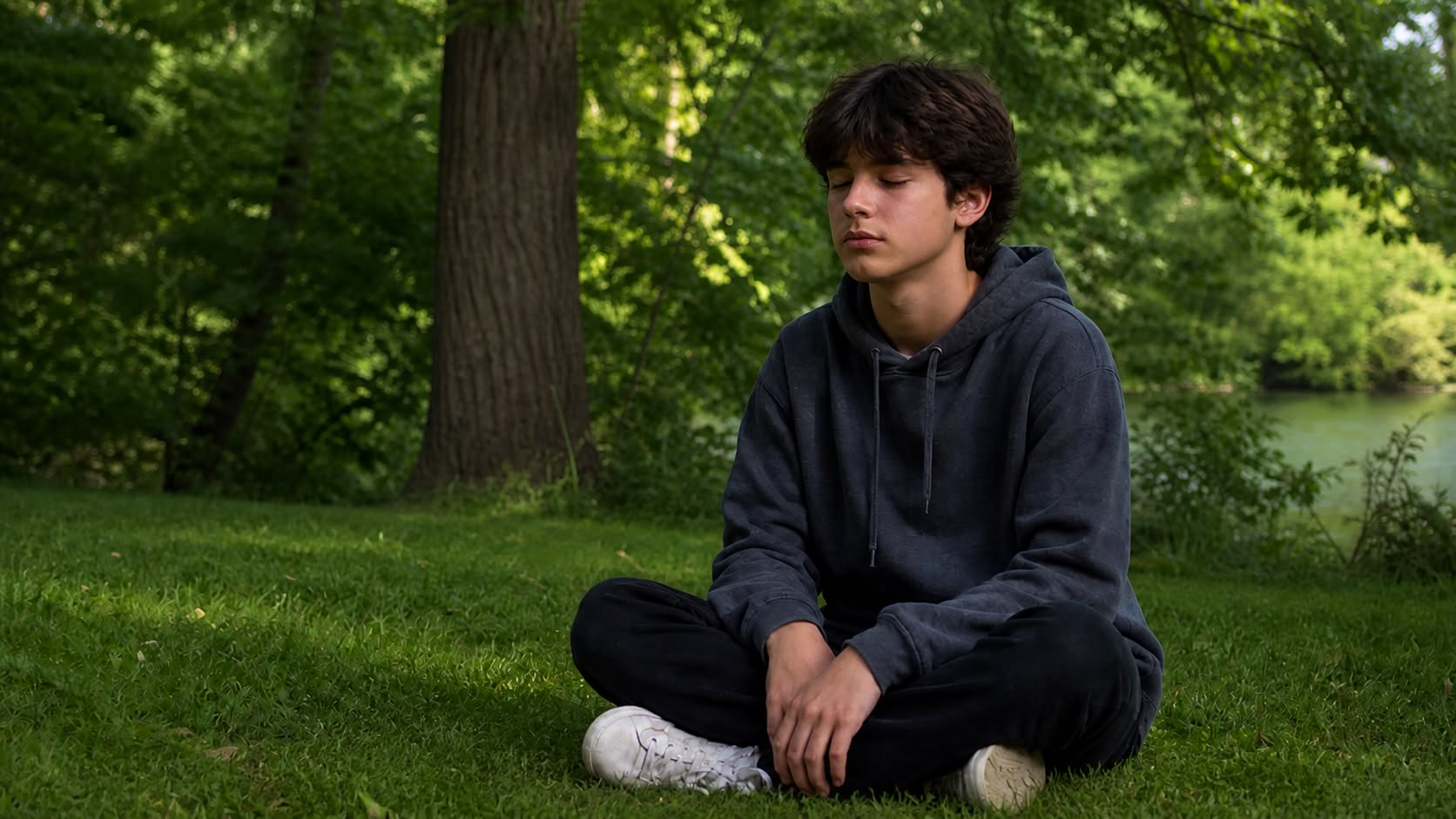
Mindfulness for teen anxiety is one of the most practical tools a teenager can have, and it does not require a perfect setting, a lot of time, or any prior experience. If your teen is carrying a storm of worry that no one on the outside can see, this post is for them, and for you.
At Davis-Smith Mental Health in New Lenox, IL, we work with teens every day who are struggling with anxiety in ways that look very different from one kid to the next. This is what we know: they are more capable than their anxiety tells them, and the right tools can help them start to see that for themselves.
What Teen Anxiety Really Looks Like Day to Day
Anxiety in teenagers does not always look the way most people expect.
Some teens carry it entirely on the inside. They have negative thoughts, intrusive thoughts that keep popping up, and the people around them would never guess how much they are struggling. Others show it through avoidance, pulling back from things that feel outside their comfort zone.
For some, it comes out as crying, anger, fidgeting, or struggling to make eye contact. Every kid is different, and every situation is different.
According to Jessica Davis, Practice Owner of Davis-Smith Mental Health, “Internally, it feels like a storm. Constant butterflies, difficulty focusing, trouble communicating their feelings.”
The most important thing to understand is that anxiety is not a character flaw or a sign that something is permanently wrong. It is the nervous system doing exactly what it was designed to do, just at the wrong volume.

Why Mindfulness for Teen Anxiety Works
Mindfulness for teen anxiety works because it pulls teenagers out of the spiral of anxious thinking and into the present moment.
When a teen is caught in anxiety, their mind is usually somewhere in the future, imagining worst-case scenarios or replaying difficult conversations. Mindfulness interrupts that pattern. It gives them something to focus on right now, whether that is their breath, the feeling of the ground beneath their feet, or the sound of a calm voice guiding them through an exercise.
Jessica Davis describes it this way: mindfulness keeps you grounded, gets you out of the negative thoughts, and puts you in a place that is positive, healthy, and supportive. When someone is walking you through it, you are almost transported somewhere else. That is exactly what a teen who is stuck in their own head needs.
The Anxiety and Depression Association of America notes that mindfulness-based practices have been shown to reduce anxiety symptoms across age groups, including adolescents. It is not a cure, but it is a real and accessible starting point.
For teens who have also been struggling with low mood alongside their anxiety, our depression counseling page offers additional information on how we can help.
The “Be Still” Practice and Where It Comes From
The concept of “Be Still” is something Jessica Davis has carried with her since childhood. It is a life phrase her mother instilled in her, and it has shaped not only the way she manages her own anxiety but also the way she works with the teens who come to Davis-Smith Mental Health.
Being still does not mean doing nothing. It means not jumping into things, slowing down, and not feeling like you have to make a quick judgment call in the middle of a hard moment.
“Being still means taking the time to walk through it yourself and notice things yourself instead of relying on others to fix it.” — Jessica Davis, Practice Owner of Davis-Smith Mental Health
That is a powerful shift for a teenager who has been taught, often by well-meaning adults, that the goal is to make the uncomfortable feeling stop as fast as possible. Being still says something different. It says: you can sit with this, and you are stronger than this feeling.

Getting Your Teen to Actually Try Mindfulness
If your teen rolls their eyes at the word mindfulness, you are in good company. Jessica Davis says she has rolled her eyes at it too.
“It’s just a phrase that feels overdone and can feel difficult,” she says. “It’s really just misunderstood. There’s not a healthy promotion going on these days to help people understand what mindfulness truly means.”
The key to getting teens to actually engage is pairing mindfulness for teen anxiety with something concrete they can follow along with. YouTube has a wide variety of guided mindfulness exercises well-suited for teenagers. The Block Out the Noise Podcast and its anxiety survival toolkit also include guided exercises teens can listen to on their own time.
When someone is walking you through it, the practice becomes less abstract and far less frustrating. It becomes something to do rather than something to think your way into, and that makes all the difference.
“Once teens actually experience what mindfulness feels like, the conversation changes completely.” — Jessica Davis, Practice Owner of Davis-Smith Mental Health

How Social Media Makes Teen Anxiety Worse
Social media is one of the biggest contributors to teen anxiety today, and most teens already know this on some level, even if they cannot stop scrolling.
The problem is constant comparison. When your teen opens any app, they are immediately surrounded by other people’s highlight reels: filtered appearances, picture-perfect relationships, achievements, and social lives that look effortlessly full.
Jessica Davis puts it plainly: “Social media makes you feel like you are behind in a thousand different ways. You look at other people and see they are living their best life or doing all these things, and you are not. It leads to this view that other people are doing so much more than you, and that might not be the case, but it just feels that way.”
This is where the “Be Still” practice connects directly to technology. Putting the phone down is not just about reducing screen time. It is about stepping off the comparison treadmill long enough to come back to your own life, your own pace, and your own worth.
What Parents Often Get Wrong
When parents watch their teen struggle with anxiety, the instinct is to fix it. To step in, solve the problem, handle the situation, or remove the obstacle entirely so their child does not have to feel that discomfort.
Jessica Davis sees this pattern often, and her message to parents is direct: stepping in and taking over tends to make the anxiety worse over time, not better.
“They think they’re helping,” she says, “but really, they’re sending the message the kid already feels, which is that they’re incapable of figuring these things out. The truth is, they are capable. They just have to communicate, engage, and take a minute and push through a really tough time.”
“They are capable. They just have to communicate, engage, and take a minute and push through a really tough time.” — Jessica Davis, Practice Owner of Davis-Smith Mental Health
What parents can do instead: be present, listen, support, and yes, even cry alongside them. But do not complete the task for them. Do not allow full avoidance of the situation. Let them feel the discomfort and know that you are there while they work through it. That is the kind of support that builds confidence over time.

How to Practice Being Still as a Teenager
The most realistic version of mindfulness for teen anxiety is one that is simple, grounded, and paired with something that helps anchor them in the present moment.
Jessica Davis suggests starting with the physical environment. Going outside, if possible, can help. The natural setting and fresh air create a natural break from the noise of the day. If being outside is not an option, a quiet spot in the bedroom works just as well.
From there, the practice is about grounding. Noticing the feel of the grass beneath them or the texture of a blanket under their hands. Letting the senses pull attention back into the present instead of letting the mind race ahead into everything that could go wrong.
Breathing is the anchor. Slow it down. Notice the air coming in and going out. Let that rhythm do the work.
Jessica also recommends pairing being still with guided meditation. “The best pairing is mindfulness and meditation combined,” she says. “It can help you to be still while having someone walk you through how to do it, and feel less frustrated.” YouTube, apps like Calm or Headspace, and the Block Out the Noise Podcast are all great places to start.
Here are five practical ways teens can practice being still:
- Go outside. Sit for five minutes with no phone and no headphones. Just notice what is around you.
- Touch something grounding. The grass, a blanket, the floor. Notice the texture and temperature under your hands.
- Breathe slowly. Inhale for four counts, hold for four, exhale for four. Repeat as needed.
- Follow a guided meditation. Let someone else lead so your brain does not have to work as hard.
- Put the phone away first. Even ten minutes of phone-free stillness can shift how the nervous system feels.
This is a skill, and like any skill, it takes practice. It may feel awkward or frustrating at first, and that is completely normal. The goal is not to feel nothing. The goal is to feel like you have some say in what your nervous system does next.
When Mindfulness for Teen Anxiety Is Not Enough
Mindfulness for teen anxiety is a valuable practice, but it is not a replacement for professional support when things get serious.
Jessica Davis is honest about this: “Mindfulness is a harder practice to work on and understand. I don’t think it’s one of those things where they’ve tried mindfulness and now they need therapy.”
The better question is: what does the overall picture look like?
If your teen is struggling day after day and it feels like an overwhelming battle for both of you, that is the signal to reach out. If you have tried to support them and it does not seem to be helping, therapy is a great next step, not just for your teen but for you as a parent as well.
Learn more about what anxiety counseling at Davis-Smith Mental Health looks like, and what to expect when your family takes that first step.
What to Say to a Teen Who Feels Different Because of Their Anxiety
One of the hardest parts of teen anxiety is the isolation that comes with it. The feeling that no one else struggles this way, that something must be fundamentally wrong.
Jessica Davis does not try to talk teens out of that feeling by telling them their thoughts are incorrect. She meets them where they are.
“I can understand how it feels that way,” she says. “Sometimes you are in your own head, and no one knows how you feel. It’s difficult to know and trust that what you’re feeling is valid when it feels like you are the only one.”
Her goal isn’t to convince a teen that their anxiety is no big deal. Her goal is to help them see that they are more than their anxiety, that the people who love them will accept them for who they are, and that they will get there too.
“At some point, they will accept themselves for who they are and won’t feel this need to be who they think people want them to be. They can just be who they are.” — Jessica Davis, Practice Owner of Davis-Smith Mental Health
This is the heart of what we do at Davis-Smith Mental Health. Helping teens become more confident, more comfortable in their own skin, and more capable of trusting themselves through hard moments.
Mindfulness at Home vs. Time to Seek Therapy
| Situation | Try Mindfulness at Home | Consider Seeking Therapy |
|---|---|---|
| How long it has been going on | Occasional stress or recent onset | Persistent anxiety lasting weeks or months |
| Impact on daily life | Manageable with some support | Affecting school, sleep, or friendships |
| Parent’s experience | Challenging but manageable | Feels like an overwhelming battle daily |
| Teen’s engagement | Willing to try coping tools | Refusing all support or shutting down |
| Physical symptoms | Mild butterflies or tension | Regular panic attacks, headaches, or stomachaches |
| Mood | Situational worry or sadness | Persistent withdrawal, irritability, or sadness |
Ready to Get Your Teen Real Support?
If you are watching your teen struggle and wondering whether it is time to reach out, trust that instinct. At Davis-Smith Mental Health in New Lenox, IL, we work with teens across the Chicagoland area who are dealing with anxiety, and we meet them exactly where they are.
When your teen comes in for their first appointment, they walk into a comfortable waiting room with snacks and drinks ready, a space designed to help them feel at ease before they even say a word. Their therapist will come out, greet them personally, and bring them back for a real conversation, not an evaluation.
The goal of that first session is simple: get to know them. Not just their anxiety, but who they are, what they enjoy, who their friends are, and what matters to them. We build the relationship first. Everything else follows.
Call us at 815-409-5940 or schedule an appointment online.
You can also explore what to expect at your first appointment or visit our FAQs page to learn more before you reach out.


